The top things to do in Kabul are Babur's Garden, Darul Aman Palace and the National Museum of Afghanistan (which face each other), the Shah-Do Shamshira and Pul-e Khishti mosques, Mandawi bazaar and Chicken Street, and the city views from Bibi Mahru and Nadir Khan hills. With an extra day, head west to Qargha and Paghman. Two days covers most of it.
Last checked: October 2026. Opening status, visitor rules and flights in Afghanistan change quickly. Ask locally or check an official source before you go, and see today's schedules and fares in the live search on our site.
Places to visit in Kabul at a glance| Sight | Type | Area | Best time of day |
|---|
| Babur's Garden | Historic garden and tomb | West slope of Sher Darwaza, south of the old city | Morning |
|---|
| Darul Aman Palace | Historic palace | Darulaman, south-west Kabul | Morning or late afternoon |
|---|
| National Museum of Afghanistan | Museum | Darulaman, opposite the palace | Morning |
|---|
| Shah-Do Shamshira Mosque | Historic mosque | City centre, on the Kabul River | Late morning |
|---|
| Pul-e Khishti Mosque | Mosque | Old city, on the Kabul River | Late morning |
|---|
| Sakhi Shrine | Shrine and mosque | Karte Sakhi, west Kabul | Morning |
|---|
| Chicken Street | Carpets and handicrafts | Shahr-e Naw | Afternoon |
|---|
| Mandawi bazaar | Traditional market | Old city, near the Kabul River | Morning |
|---|
| Ka Faroshi bird market | Market | Behind Pul-e Khishti Mosque | Morning |
|---|
| Bibi Mahru hill | Hill and viewpoint | Above Wazir Akbar Khan | Late afternoon and sunset |
|---|
| Nadir Khan hill (Maranjan) | Royal tomb and viewpoint | East Kabul | Late afternoon |
|---|
| Qargha | Reservoir lake | North-western edge of the city | Afternoon |
|---|
| Paghman | Gardens and Taq-e Zafar arch | Hills west of Kabul | Full day |
|---|
Read this before you plan anything. Some governments advise their citizens against all travel to Afghanistan; the UK Foreign, Commonwealth & Development Office (FCDO), for example, does so in advice last updated on 30 July 2026. Check your own government's advice and what your travel insurance covers.
- Sightseeing permit: foreign visitors reportedly need a permit from the Ministry of Information and Culture to visit sights in Kabul, and some mosques and shrines ask to see it. The rule is not clearly published and changes; confirm with an official Afghan mission or a registered tour operator before you travel.
- Visa: travellers on a non-Afghan passport need a visa. Get it only through official channels.
- Dress: dress modestly. Men in long trousers and sleeved shirts; women in loose, long clothing with a headscarf. Cover up further for mosques and shrines.
- Photography: never photograph security forces, checkpoints, or government or military buildings. Ask before photographing people, especially women, and put the camera away if a guard says no.
- Women and parks: since November 2022 women have been barred from Kabul's public parks, and reports say this includes Babur's Garden for Afghan women. If you are travelling with family, ask which places are open to women before you go.
Historic Kabul sightseeing: Babur's Garden, Darul Aman and the National Museum
Babur's Garden is a terraced garden on the western slope of Sher Darwaza mountain, with the grave of Babur, founder of the Mughal dynasty, at the top. Babur asked to be buried in Kabul. Badly damaged in the wars, the garden was restored from 2002 with the Aga Khan Trust for Culture; the small marble mosque, the caravanserai and the avenues of trees are worth the visit again. Go early while it is cool, and look back over the city from the top terrace.
Darul Aman Palace was built in the 1920s under King Amanullah Khan to designs by European engineers. Left a near-ruin by the 1990s, it was restored from 2016, with most of the work finished by summer 2019 for the centenary of Afghan independence. It stands on a rise in south-west Kabul and looks best in morning or late-afternoon light. Visitors report that the public entrance can be hard to find, so ask your driver to take you to the gate.
The National Museum of Afghanistan has stood in Darulaman since 1931, directly opposite the palace, so see both in one trip. Much of the collection was destroyed or looted during the wars, but what survives, from Buddhist-era sculpture to Islamic-period pieces, still tells a long story. There is reportedly a separate fee for cameras; ask at the door.
Mosques and shrines in Kabul
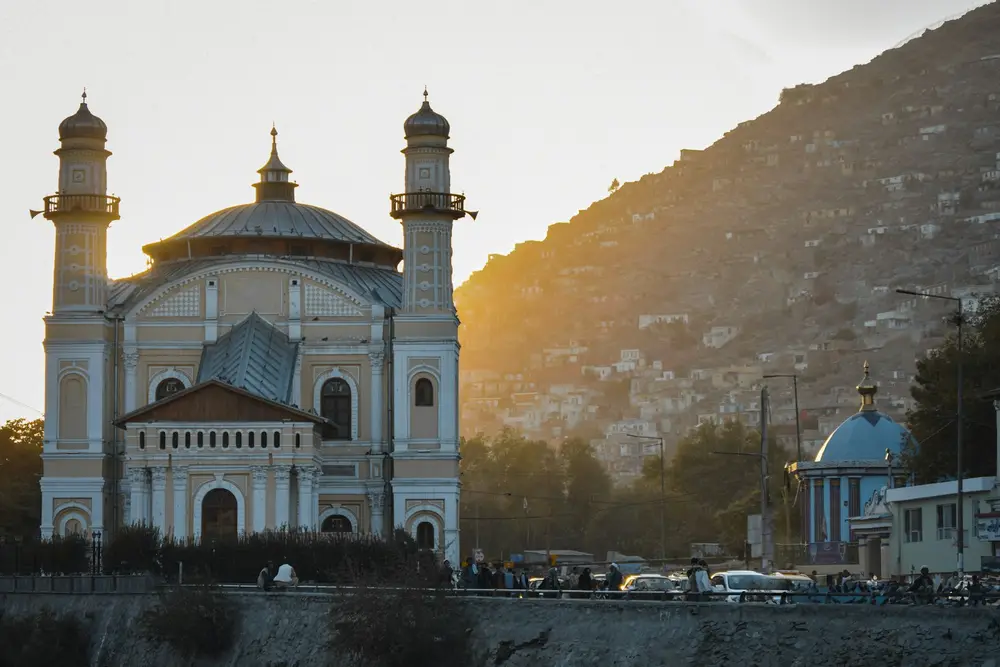
Shah-Do Shamshira Mosque is the two-storey yellow mosque with two minarets in the photo at the top of this post. Built under Amanullah Khan in the 1920s beside the Kabul River and the Shah-Do Shamshira bridge, its European-style stucco makes it unlike any other mosque in the country. The name, "King of Two Swords", comes from a local legend about a warrior who fought with a sword in each hand. Late morning, from across the river, is when the light is on the façade.
Pul-e Khishti is Kabul's largest mosque, its blue dome visible from far off. The first building dates from the 18th century; it has been rebuilt since. It sits in the old city next to the bazaars, so combine it with Mandawi and the bird market. Avoid prayer times, especially on Fridays.
The Sakhi Shrine (Ziyarat-e Sakhi Shah-e Mardan) in the Karte Sakhi district of west Kabul is one of the city's best-known shrines, and a place full of memories for many Kabulis. It was renovated between 2008 and 2016, when new domes were added. Go respectfully, dressed for a shrine, and don't photograph pilgrims.
Non-Muslims are reportedly not admitted to some mosques in Afghanistan. If you are not Muslim, ask before entering or admire the building from outside.
Kabul's bazaars: Chicken Street, Mandawi and the bird market
Chicken Street (Kocha-e Murgha) in Shahr-e Naw was for decades Kabul's shopping street for foreigners: carpets, kilims, lapis lazuli, embroidered coats, jewellery and handicrafts. Foreign customers have been scarce since 2021 and many shops are quiet, but it is still the place for souvenirs. Bargaining is normal. Ask prices in afghanis; some shops take US dollars.
Mandawi bazaar
Mandawi, near the Kabul River, is one of the oldest and busiest markets in the city, built for daily life rather than visitors: spices, dried fruit, rice, tea and everything a Kabul household needs. Raisins, dried mulberries and walnuts usually cost less here than in Shahr-e Naw. Go in the morning and keep a firm hold on your bag and phone.
The Ka Faroshi ("straw sellers'") lane behind Pul-e Khishti Mosque is lined with stalls stacked to the roof with cages of partridges, pigeons, nightingales and canaries. You hear it before you see it.
The best views of Kabul: Bibi Mahru and Nadir Khan hills
Bibi Mahru is a low hill above the Wazir Akbar Khan district. On top sits a large old swimming pool with a high diving board, a fixture of old Kabul photographs. Go in the late afternoon and stay for sunset as the city lights come on.
Nadir Khan hill, also called Maranjan hill, rises in east Kabul and is crowned by the marble mausoleum of King Mohammed Nadir Shah and King Mohammed Zahir Shah. The old city, Maiwand Avenue and the surrounding mountains are all in view. On windy days children fly kites here — a scene many returning Kabulis will remember from their own childhood.
Day trips from Kabul: Qargha and Paghman
Qargha is the reservoir behind Qargha dam on Kabul's north-western edge, and a long-standing weekend escape: boats, tea by the water and kebabs. Spring and summer afternoons are best. Lakeside venues may have separate rules for families; ask before you go.
Paghman lies a few miles beyond Qargha in the hills west of Kabul, at about 2,300 m. Known as the garden capital of Afghanistan, it is cooler than the city in summer. Its Taq-e Zafar arch was built by Amanullah Khan in 1929 to commemorate independence in 1919, and rebuilt in 2005 after war damage. Give Paghman a full day, or at least half, and stop at Qargha on the way back.
This plan uses only the places above. Get around by taxi or with a driver you know, and agree the route before you set off.
1. günDay 1: the old city and the hills
- Morning
Babur's Garden
Early, while it is cool and quiet.
- Late morning
Shah-Do Shamshira and Pul-e Khishti mosques
Both are on the Kabul River; mind prayer times.
- Midday
Ka Faroshi bird market and Mandawi bazaar
Lunch: Kabuli pulao at an old-city samovar.
- Late afternoon
Bibi Mahru hill
Stay for sunset.
2. günDay 2: Darulaman, Shahr-e Naw and Qargha
What to eat in Kabul: Kabuli pulao, mantu and bolani
A trip to Kabul isn't complete without Kabuli food. Don't miss:
- Kabuli pulao — the national dish: rice with lamb, carrots and raisins.
- Mantu — steamed meat dumplings topped with yoghurt and a meat or lentil sauce.
- Ashak — like mantu, but filled with leeks, under yoghurt and sauce.
- Bolani — thin flatbread stuffed with potato or leek and fried on a griddle; the best street food.
- Kebab — skewered and pot kebabs at samovars and kebab houses.
- Sheer yakh and tea — traditional Kabuli ice cream for summer, and green or black tea with every meal.
Getting to Kabul: flights and arriving
Most visitors arrive at Kabul International Airport. Direct flights from Dubai and from Iranian cities such as Mashhad and Tehran have run at different times, but the list of airlines changes often. Our guides to Kabul to Mashhad flights and Kabul to Dubai flights cover the routes and booking tips, and flying to Kabul covers the airport, baggage and documents.
Fares depend on the season, the day of the week and how early you book; flights fill up before Eid and the summer holidays. Search live flights to Kabul to compare today's schedules and fares.
Bu seyahati planlayın
KBLKabilAfganistan
Search flights to Kabul from Mashhad, Tehran and Dubai.
Some governments, including the UK, advise against all travel to Afghanistan. If you go, read your own government's advice, limit going out after dark, and keep your distance from crowds and checkpoints — and don't photograph them.
Foreign visitors reportedly need a permit from the Ministry of Information and Culture. Rules for Afghans returning on an Afghan passport may differ, and they change often; check with an official Afghan mission before you travel.
Babur's Garden is open to visitors, but Afghan women have reportedly been barred since 2022. Hours and rules change, so ask locally before you go.
Qargha for an afternoon by the water, and Paghman for its gardens, cooler air and the Taq-e Zafar arch. Both lie to the west and north-west of the city and fit into one day.
Where should I book a flight to Kabul, and in what currency?
Book through reputable sites or the airline's official office. On our site the fare appears in the currency shown when you search; check the final price before you pay. In Kabul itself, prices are usually quoted in afghanis and sometimes in dollars.